
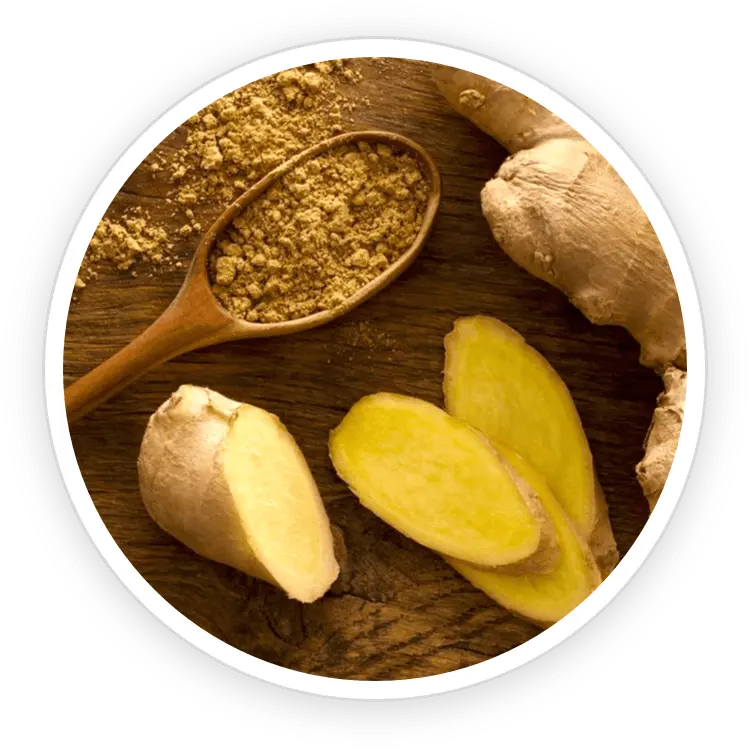
The reviewed Neotonics label lists “Organic Ceylon Ginger” inside a 430 mg proprietary blend. Ginger has substantial human research, especially in specific nausea settings, but the individual Neotonics dose and preparation are not disclosed. Those trials do not establish that the gummy treats nausea or another digestive condition.
- Present
- Yes
- Label wording
- Organic Ceylon Ginger
- Individual dose
- Not disclosed
- Blend
- 430 mg combined blend
What is ginger?
Ginger is the rhizome of Zingiber officinale, used as food and in traditional wellness systems. Its pungent constituents include gingerols and shogaols, whose proportions vary with processing and extraction.
What does “Ceylon ginger” mean here?
In the current product context, “Organic Ceylon Ginger” is label wording. The reviewed panel does not provide a separate botanical species, cultivar, geographic certificate, extraction ratio or standardized marker. This guide therefore does not invent a pharmacological distinction from ordinary Z. officinale.
Why ginger is used in digestive-wellness products
Ginger has a long culinary and traditional association with digestion and has been investigated for gastric motility, nausea and other symptoms. A familiar use and a plausible mechanism can justify research, but neither guarantees an outcome in a multi-ingredient gummy.
Human evidence related to digestive outcomes
A systematic review of 109 randomized controlled trials found the most consistent evidence in pregnancy-related nausea and vomiting and some digestive-function contexts, while quality and consistency varied by outcome. NCCIH describes evidence as context-specific and notes uncertainty for chemotherapy-related and postoperative nausea in some assessments.
Nausea evidence belongs to specific settings
Trials may study pregnancy, chemotherapy, surgery or motion sickness, each with different doses and care standards. Neotonics is not labeled as an anti-nausea medicine and should not replace evaluation or prescribed treatment for persistent vomiting, dehydration or another concerning symptom.
Antioxidant claims: where the boundary sits
Ginger contains compounds that demonstrate antioxidant activity in laboratory tests, and some human studies measure oxidative-stress biomarkers. That does not establish a visible skin outcome, “detoxification,” or protection from disease. Biomarkers, clinical symptoms and cosmetic changes are different endpoints.
Dose transparency
The 430 mg figure covers ginger plus eight other ingredients. Ginger’s individual quantity, extract form and marker-compound content are unknown. Isolated-ginger trials commonly report doses in hundreds or thousands of milligrams; those exposures cannot be assigned to Neotonics.
Why isolated-ginger trials cannot be assumed for Neotonics
A trial’s preparation, dose, schedule, population and endpoint must match before direct inference is reasonable. An undisclosed amount in a blend does not meet that standard. Ingredient research supplies rationale, not finished-product proof.
Safety and interactions
NCCIH notes that oral ginger can cause abdominal discomfort, heartburn, diarrhea, and mouth or throat irritation. Medication interactions are not fully resolved; concerns are commonly raised for anticoagulants, and people with gallstone disease or around surgery should seek personal advice. Pregnancy-related supplement decisions should be discussed with a healthcare professional even though ginger has been studied in pregnancy.
Talk with a clinician or pharmacist before use if you take blood-thinning or glucose-lowering medicine, have a bleeding or gallbladder disorder, are pregnant or nursing, or are preparing for surgery.
References
- NCCIH. Ginger: Usefulness and Safety.
- Ginger on human health: systematic review of 109 randomized trials.
- Ginger for nausea and vomiting: overview of systematic reviews and meta-analyses.
- Warfarin and food, herbal or dietary-supplement interactions: systematic review.