
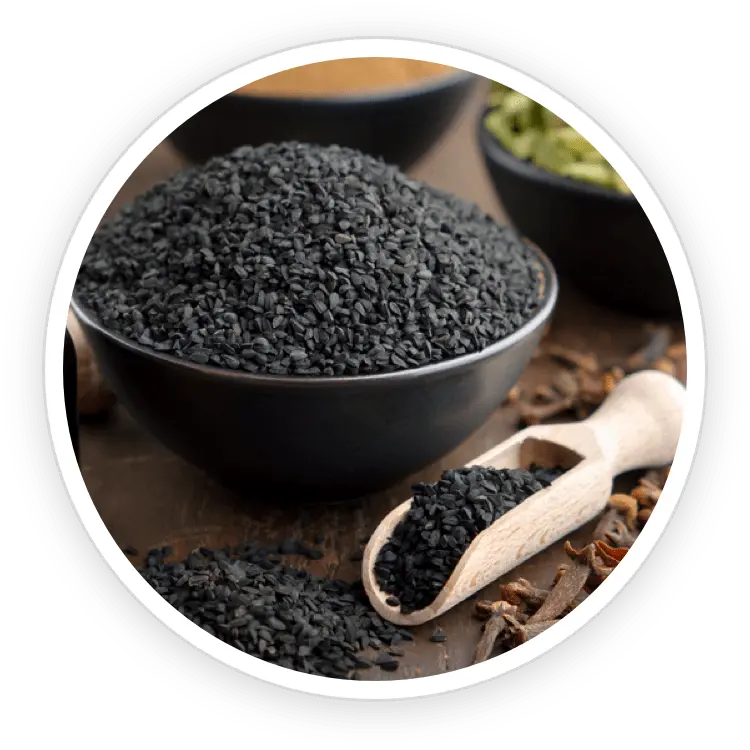
Babchi is Psoralea corylifolia, also accepted as Cullen corylifolium. Blue Lotus is Nymphaea caerulea. The reviewed Neotonics label identifies Babchi—not Blue Lotus.
- Present in Neotonics
- Yes
- Botanical identity
- Psoralea corylifolia / Cullen corylifolium
- Individual amount
- Not disclosed
- Blend
- Within 430 mg combined blend
- Evidence type
- Ingredient-level only
What is Babchi?
Babchi is a leguminous plant used in Ayurvedic and traditional Chinese practices, especially its seeds. Scientific literature uses both Psoralea corylifolia and the accepted combination Cullen corylifolium. Its material contains multiple compounds, including psoralens and bakuchiol; the whole botanical cannot be treated as one purified constituent.
Babchi versus bakuchiol
Bakuchiol is a chemical constituent that can be isolated from Babchi and other plant sources. A study of purified topical bakuchiol is not a study of orally consumed Babchi seed, a mixed extract, or Neotonics. Composition, route and exposure differ.
Babchi versus Blue Lotus
Blue Lotus is an aquatic plant in the water-lily family. Babchi is a terrestrial legume. Similar skin-marketing language does not make them botanically or chemically interchangeable.
Why botanical identity matters
Identity determines which evidence and safety reports are relevant. Common names, plant part, extract method and standardization can all change a botanical product. The Neotonics label says Babchi but does not state plant part, extract ratio, marker compounds or individual dose.
Why Babchi may appear in a skin-wellness formula
Babchi has a long traditional association with skin applications and contains compounds studied in laboratory and topical contexts. That history explains commercial interest, but it is not proof of an oral anti-aging effect.
Human evidence: keep route and material separate
Human literature involving P. corylifolia often concerns traditional preparations or psoralen-based approaches for pigmentation disorders. Those contexts may involve topical application, ultraviolet exposure, or pharmaceutical psoralens. They do not establish that an unspecified oral amount in Neotonics improves healthy-looking skin.
Traditional use versus modern clinical evidence
Traditional use documents historical practice, not controlled efficacy. Modern claims require a defined material, dose, comparator and outcome. High-quality finished-product evidence for Neotonics was not located for this guide.
Oral evidence versus topical evidence
Skin-applied bakuchiol or psoralen treatment cannot be generalized to swallowed Babchi. Oral exposure changes absorption, metabolism, interactions and organ-level safety.
Dose transparency
Neotonics discloses a 430 mg blend shared by nine ingredients. Babchi’s quantity is not separated. Study doses cannot be assumed to match, and efficacy or safety cannot be inferred from the ingredient name alone.
Safety and interaction considerations
NCBI LiverTox documents case reports of liver injury associated with oral P. corylifolia seed preparations. A systematic safety review also reports phototoxic reactions and liver-related adverse events in Babchi/psoralen contexts. These reports do not quantify risk from Neotonics’ unknown amount, but they justify caution rather than “natural equals safe” messaging.
Psoralens can increase photosensitivity in certain preparations and treatment settings. Seek clinician or pharmacist advice before use if you have liver disease, use photosensitizing medicines, take other medication, are pregnant or nursing, or receive phototherapy. Stop and seek care for jaundice, dark urine, severe rash, blistering or another significant reaction.
What this research cannot prove
It cannot prove that Neotonics contains a clinically studied Babchi preparation or enough of any constituent to reproduce a study. It cannot justify calling Babchi “Blue Lotus” or the whole ingredient “bakuchiol,” and it does not prove wrinkle reduction.
Frequently asked questions
Is Babchi the same as Blue Lotus?
Is Babchi the same as bakuchiol?
How much Babchi is in Neotonics?
References
- NCBI LiverTox: Psoralen and Psoralea corylifolia liver-injury reports.
- Safety of medicinal plants used for vitiligo and hypermelanosis: systematic review.
- Psoralea corylifolia: botany, pharmacology and toxicology review.