
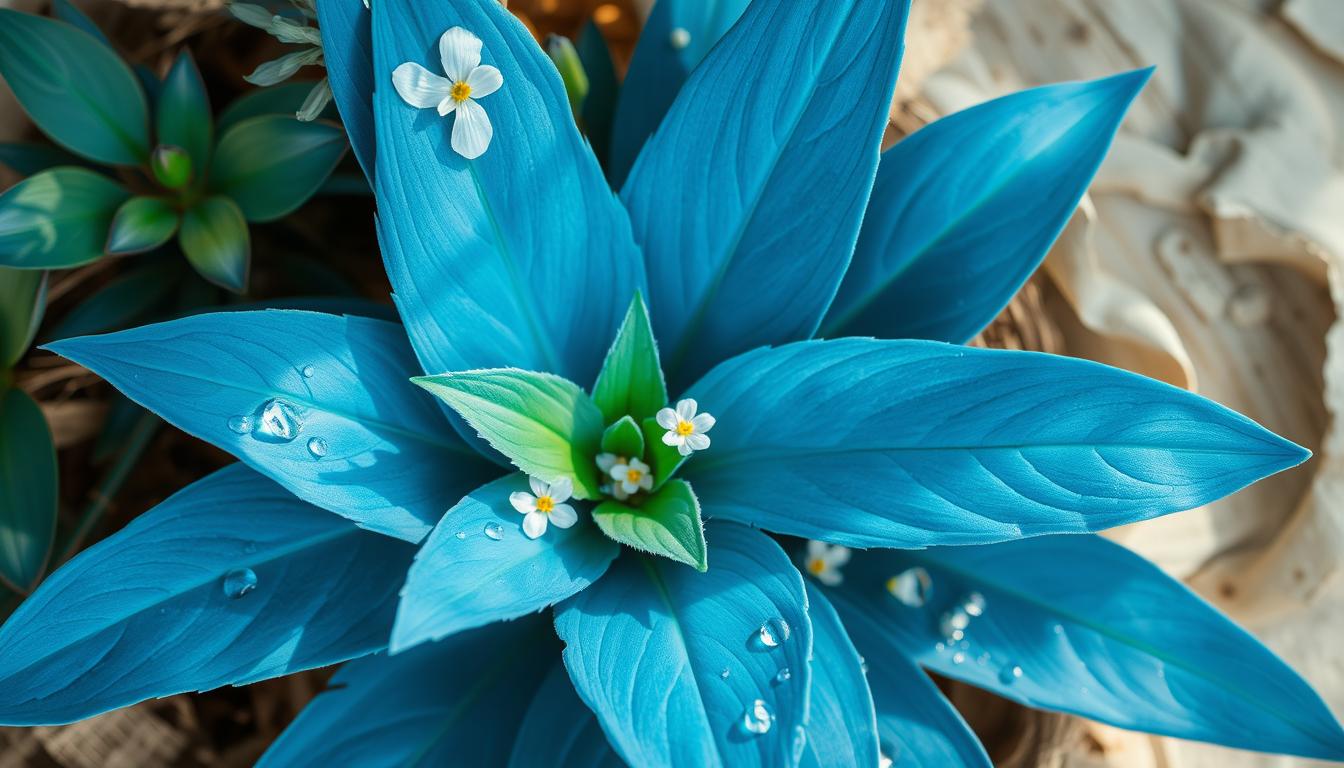
Blue Lotus is not a listed Neotonics ingredient
Blue Lotus (Nymphaea caerulea) and Babchi (Psoralea corylifolia) are different plants. The current Neotonics Supplement Facts list Babchi; they do not list Blue Lotus or Nymphaea caerulea. This page is retained as an independent botanical reference and should not be read as a description of the Neotonics formula.
What is Blue Lotus?
Blue Lotus, also called the blue Egyptian water lily, is an aquatic plant associated with ancient Egyptian art and ritual. Its accepted botanical identity is Nymphaea caerulea. Historical use does not establish a modern cosmetic or medical benefit.
Why does it appear in skincare discussions?
Blue Lotus extracts are marketed in oils, creams, and fragrances. Laboratory analyses describe plant compounds with antioxidant activity, creating plausible research interest. Compound identification and test-tube results do not demonstrate that a finished product reduces wrinkles, brightens skin, controls acne, or calms eczema.
What the evidence can and cannot show
Reasonable statements
- Blue Lotus is Nymphaea caerulea.
- It has a documented cultural history.
- Extracts contain identifiable phytochemicals.
- A complete topical formula may provide moisture.
Not established
- That Blue Lotus treats a skin disease.
- That it stimulates clinically meaningful collagen production.
- That oral use is an established skin strategy.
- That it is part of the current Neotonics formula.
Blue Lotus versus Babchi
| Plant | Botanical name | Current Neotonics label |
|---|---|---|
| Blue Lotus | Nymphaea caerulea | Not listed |
| Babchi | Psoralea corylifolia / Cullen corylifolium | Listed in the 430 mg proprietary blend |
Similar marketing language does not make these plants interchangeable. Use the current Neotonics ingredient list as the controlling formula reference, then read the dedicated Babchi in Neotonics evidence and safety guide.
Safety considerations
“Natural” does not guarantee safe oral or topical use. Botanical identity, extraction method, concentration, contamination, medication interactions, pregnancy, and individual sensitivity matter. Patch-test cosmetics as directed and consult a qualified professional before ingesting a botanical product.
Research notes
- Review of Nymphaea phytochemistry and pharmacology — compound context, not cosmetic proof.
- Plant antioxidant research methods and limitations.
Blue Lotus is an independent botanical topic, but it is not Babchi and is not listed on the current Neotonics Supplement Facts.
Use the label—not an old article—to identify ingredients.
The formula page separates the probiotic, proprietary blend, and other gummy ingredients.
For the actual supplement rather than this independent botanical topic, see Neotonics Skin & Gut.